

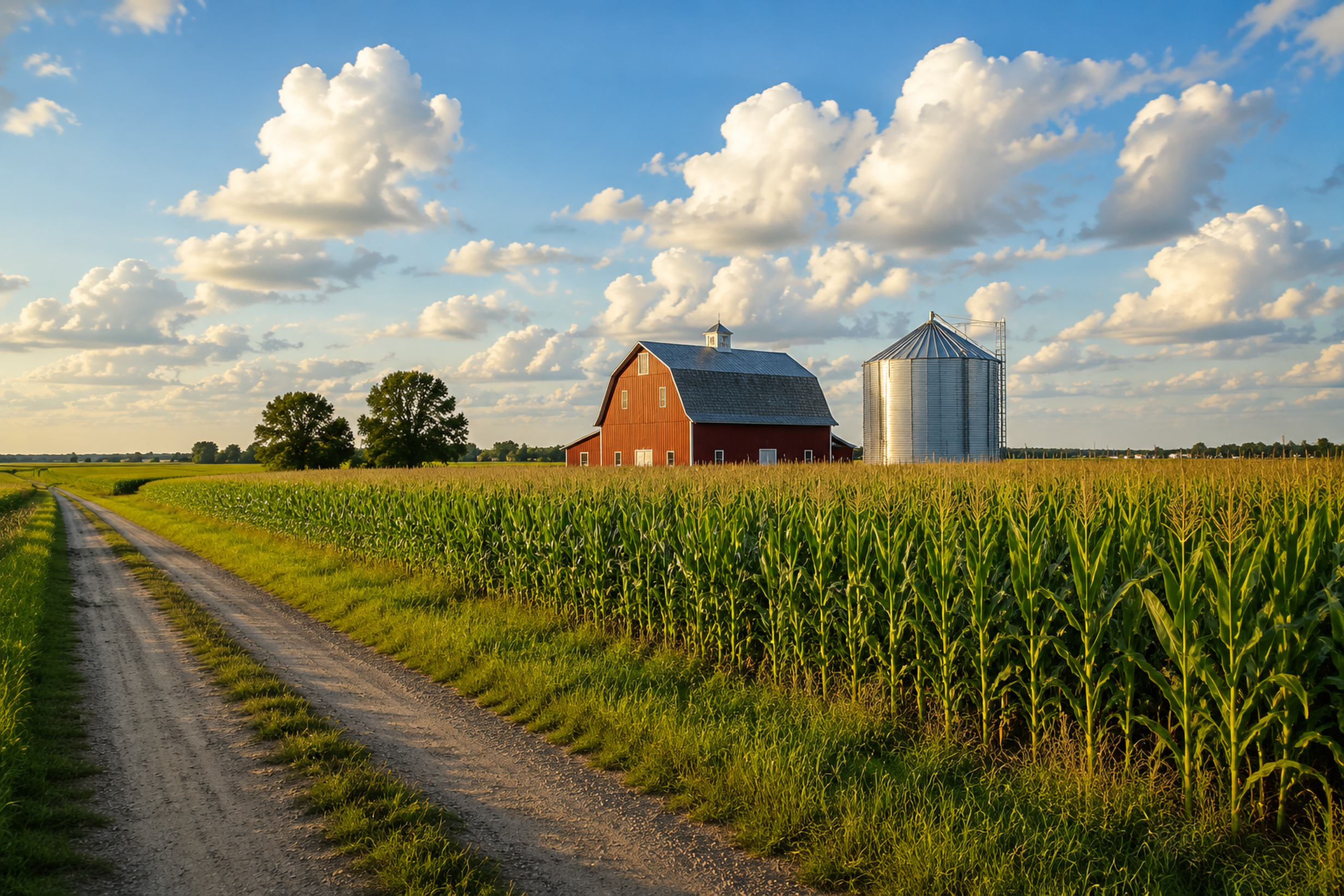
Farm mutual insurance holds a place in American insurance that no other carrier type can claim. Between 1870 and 1900, farmers organized roughly 1,100 county-based farm mutual insurance companies, and that number peaked near 2,000 by 1925, according to the National Association of Mutual Insurance Companies (NAMIC). Neighbors pooled their resources to rebuild each other’s barns and homes after a fire. That founding promise still shapes how these companies operate, whom they answer to, and how they underwrite.
It also makes farm mutual underwriting some of the most complex work in property and casualty insurance. A single farm policy can cover a family home, a commercial operation worth millions, a herd of cattle, and a fleet of equipment that crosses county lines during harvest. Each piece carries its own valuation method, its own perils, and its own coverage history.
For executives at farm mutual insurance companies, understanding these challenges is the foundation for choosing the right systems, reinsurance structures, and processes to protect members for the next hundred years. Below are the seven underwriting challenges that matter most.
What Makes Farm Mutual Insurance Companies Unique?
A farm mutual insurance company is owned by its policyholders rather than outside shareholders. The model has proven durable. NAMIC reports that more than half of today’s mutual insurers are over 100 years old, and some farm mutuals trace their roots to the 1860s. Minnesota’s first, Vasa Farmers Mutual, was founded by Swedish immigrants in 1860. Members elect the board, surplus is held for the benefit of members, and underwriting philosophy reflects the priorities of the community the company serves. Most farm mutuals operate in a defined geographic territory, write through local independent agents, and specialize in farmowners, rural property, and farm liability coverage.
These traits give farm mutuals deep local knowledge and loyal membership. They also create underwriting and operational demands that standard carriers, and the software built for them, rarely anticipate.
1. Farmowners Policies Combine Personal and Commercial Risk
Farm mutual underwriting sits where personal lines and commercial lines meet. The farmhouse needs homeowners-style coverage. The operation around it is a business, and it behaves like one.
A typical farmowners package written by a farm mutual insurance company may include:
- Dwelling and household contents, underwritten much like a standard homeowners risk
- Farm structures such as barns, machine sheds, grain bins, hoop buildings, and poultry or hog confinement buildings, many of which require agricultural valuation methods rather than residential replacement cost
- Farm personal property, written on a scheduled basis, a blanket basis, or both, and including machinery, stored grain, hay, feed, and supplies
- Livestock, covered for named perils such as lightning, electrocution, collision, and attack by animals
- Farm liability, which must account for custom farming work done for neighbors, farm stands, agritourism, and animals and equipment that share public roads
Each component changes on its own schedule. A new combine can double scheduled equipment values overnight. A family that starts hosting a fall corn maze has added a public liability exposure that did not exist in July. Farm mutual insurance underwriters need to hold all of these pieces on a single policy while rating each one correctly.
2. Farm Property Values Change Constantly
Residential property follows reasonably predictable replacement cost trends. Farm property does not.
Agricultural buildings range from century-old timber barns to modern steel confinement facilities with automated ventilation and feeding systems. An older barn may remain fully functional while carrying a replacement cost that bears little relation to its market value. A modern poultry house carries equipment breakdown exposure that a traditional barn never did.
Machinery presents a similar puzzle. Researchers at the University of Illinois found that new agricultural equipment prices rose more than 20 percent between 2021 and 2023, with one representative combine’s list price climbing from $587,000 to $741,000. GPS guidance and precision technology add further value to tractors, sprayers, and planters, and much of this equipment is leased or financed, which brings lienholder and loss payee requirements into the policy.
Stored commodities add another layer. The value of grain in a bin depends on both volume and market price, and both move throughout the season. When values are captured only at renewal, a member can be significantly underinsured by the time a loss occurs. Farm mutuals benefit from processes and systems that make mid-term value updates simple for agents and members.
3. Geographic Concentration Makes Reinsurance Critical
Many farm mutual insurance companies are chartered to write in a limited territory, sometimes a handful of contiguous counties. That local focus is a genuine strength. Underwriters know the land, the families, and the history of each operation in ways a national carrier never will.
It also means a large share of the book can sit in the path of one storm. A single hail event, derecho, or tornado outbreak can generate losses across hundreds of policies in a matter of hours. When the August 2020 derecho crossed Iowa, insurers received more than 200,000 claims totaling over $1.6 billion, including nearly 52,000 farm-related claims worth $262.5 million, according to Iowa Insurance Division figures. National carriers spread that exposure across climates and regions. A county farm mutual cannot.
This is why farm mutual reinsurance is central to solvency. Most farm mutuals purchase layered protection that may combine per-risk excess, catastrophe excess of loss, and aggregate stop-loss coverage, with facultative placements for the largest individual risks. Each treaty carries its own retentions, limits, and reporting requirements.
Executives need clear, timely visibility into where exposure sits, which risks have been ceded, and how a given event would flow through the reinsurance program. Accurate aggregation data strengthens treaty negotiations and speeds recovery after a catastrophe.
4. Legacy Forms and Endorsements Carry Decades of Commitments
Large national carriers generally write on standardized forms. Farm mutual insurance companies often take a different path. Some use AAIS farm and agribusiness programs, some use forms developed through their state mutual association, and many have layered decades of board-approved endorsements and manuscript wording on top of either foundation.
These forms reflect real promises. A farm mutual may have broadened coverage for a specific peril after a local disaster in the 1970s, or adopted its own definition of a farm structure that members have relied on for generations. Changing that wording can mean a regulatory filing, a board vote, and difficult conversations with policyholders who expect the coverage they have always had.
This history becomes a serious obstacle during a system replacement. Policy administration software designed around rigid form libraries often cannot reproduce a farm mutual’s existing coverage without extensive custom development. The ability to configure proprietary forms, endorsements, and rating rules should rank near the top of any farm mutual’s technology requirements.
5. Member Ownership, Assessable Policies, and Governance
Because members own a farm mutual insurance company, underwriting decisions carry a different weight. Members elect the board, the board sets underwriting philosophy, and the surplus built over decades belongs to the membership.
Some farm mutuals, particularly smaller town and county companies, still issue assessable policies. If losses exhaust surplus, the company may have the legal right to levy an assessment on members to cover the shortfall. IRMI defines an assessment company as an insurer that retains the right to charge more than the initial premium when premiums prove inadequate. Tracking which policies carry assessment provisions, and calculating any assessment accurately and fairly, requires careful recordkeeping that generic systems were rarely designed to support.
Membership status can also affect dividend eligibility, board service, and voting at annual meetings. Clean, reliable member data supports each of these obligations and reduces administrative risk for management.
6. Agent Knowledge Rarely Makes it into the Underwriting File
Farm mutual insurance runs on relationships. Most farm mutuals write through independent agents who live in the same communities as their members, and many have written the same families for generations. They know which operation is expanding, which one is winding down, and which son or daughter is taking over the dairy next year.
The trouble is where that knowledge lives. Much of it sits in an agent’s memory, a phone call with an underwriter, or a note in a paper file. When an underwriter approves an exception because the agent vouches for the family, the reasoning often goes undocumented. That creates several problems for management:
- Inconsistent decisions. Two similar risks can receive different terms depending on which agent submitted them and which underwriter took the call.
- Audit and regulatory exposure. Exceptions without a written rationale are difficult to defend in a market conduct exam or a reinsurer review.
- Lost institutional knowledge. When a longtime agent retires or an agency is sold, decades of insight about the book can leave with them.
- Incomplete submissions. Agents who find the submission process cumbersome tend to send the minimum, leaving underwriters to chase details about outbuildings, equipment, and farm activities.
Agent experience also affects growth. Independent agents usually represent several carriers, and when a farm mutual’s portal is slow or confusing, they may place farm business elsewhere even when the mutual offers better coverage.
Farm mutuals that capture agent insight in a structured way, through guided submission questions, underwriting notes tied to the policy record, and a documented referral and approval workflow, keep the benefit of local judgment while making decisions consistent and defensible.
7. Emerging Exposures are Reshaping the Farm
The farm itself keeps changing, and farm mutual underwriting must keep pace. Several trends deserve executive attention:
- Succession and ownership structure. More than 40 percent of U.S. agricultural land, over 150 million acres, is expected to change hands in the next 10 to 20 years, according to American Farmland Trust data. Many farms now operate through LLCs, trusts, and family partnerships. Named insureds, additional insureds, and liability exposures shift as ownership passes between generations.
- Rural lifestyle properties. Hobby farms and small acreages owned by people without farming experience present a different risk profile than working operations, even when the properties look similar on paper.
- Energy leases. USDA’s Economic Research Service found that 70 percent of utility-scale solar farms and more than 90 percent of wind turbines built between 2009 and 2020 sit on agricultural land. These projects introduce new structures, outside contractors, and new liability questions.
- Diversified income. U.S. farms earned $1.26 billion from agritourism in 2022, up 12.4 percent from 2017 after adjusting for inflation, and 57 percent of counties reported agritourism income. Farm stays, event venues, direct-to-consumer sales, and on-farm processing bring commercial exposures into what was once a purely agricultural policy.
Farm mutual insurance companies that can adjust products, rules, and rating quickly will be best positioned to serve these members without taking on unpriced risk.
Choosing a Policy Administration System for Farm Mutual Insurance
For many farm mutuals, the policy administration system is the single largest constraint on underwriting agility. Legacy platforms often hold decades of institutional knowledge, but they can make it difficult to launch new coverages, analyze concentration, or give agents a modern experience.
When evaluating a replacement, farm mutual insurance leaders should ask:
- Can the system handle dwelling, farm structures, farm personal property, livestock, and liability on a single farmowners package?
- Can our existing forms, endorsements, and rating rules be configured without custom code?
- Will we have clear visibility into geographic concentration and how exposures flow through our reinsurance program?
- Does the agent experience support fast quoting while preserving underwriter review of exceptions?
- Can we make product changes on our own timeline rather than waiting on a vendor release schedule?
Frequently Asked Questions About Farm Mutual Insurance
What is a farm mutual insurance company?
A farm mutual insurance company is a property and casualty insurer owned by its policyholders. Most were founded by farmers to share the risk of fire and storm losses, and many still focus on farmowners, rural homeowners, and farm liability coverage within a defined region.
Why is farm insurance underwriting so complex?
A farm policy combines personal and commercial exposures, including the home, agricultural buildings, machinery, stored commodities, livestock, and business liability. Values change throughout the year, and many farm mutuals write on customized forms that reflect decades of local coverage decisions.
Why do farm mutuals rely so heavily on reinsurance?
Farm mutuals often write in a small geographic area, so a single hail or wind event can affect a large share of the book at once. Layered reinsurance, including catastrophe and aggregate coverage, protects surplus and keeps the company solvent after a concentrated loss.
What is an assessable mutual insurance policy?
An assessable policy allows the mutual to charge members an additional amount if losses exceed available surplus. Assessable policies are less common today, though some smaller town and county mutuals still issue them.
What should a farm mutual look for in a policy administration system?
Key requirements include support for multi-line farmowners packages, configurable forms and rating rules, exposure and reinsurance visibility, a strong agent portal, and the ability to make product changes without heavy custom development.
WaterStreet for Farm Mutual Insurance Companies
WaterStreet Company provides P&C policy administration technology and outsourced back-office support through its B.O.S.S. division, built for small and mid-size farm mutuals and carriers. WaterStreet’s policy administration platform lets carriers set up their own products, forms, and rating rules, so a farm mutual can modernize and keep the coverage its members count on.
Ready to modernize farm underwriting? Contact WaterStreet to see how we can help your farm mutual serve its members for the next hundred years.