

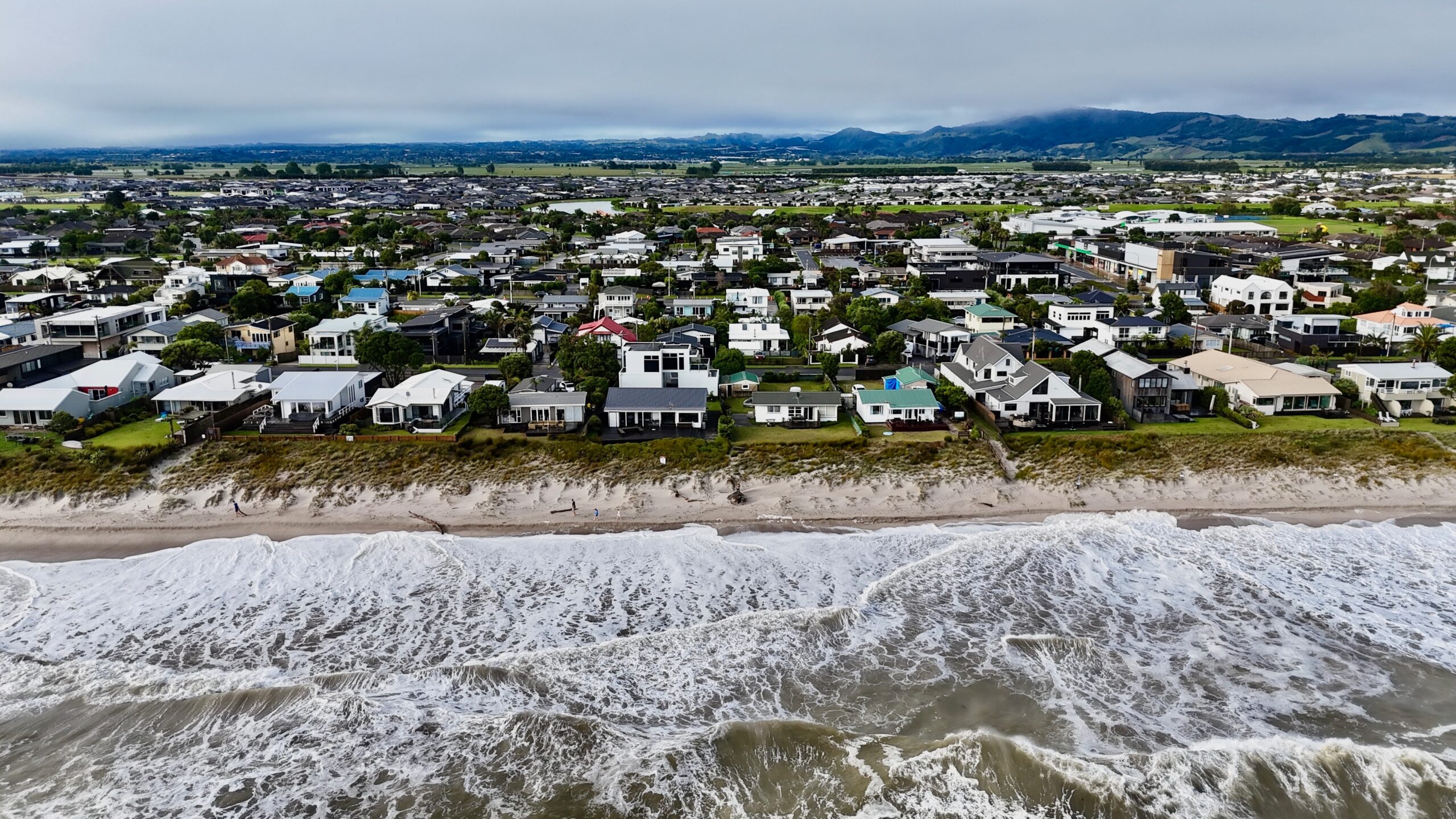
For most of the past decade, the coastal property insurance market carried a warning label. Hurricane losses, litigation, and reinsurance costs pushed coastal insurers out of the most exposed states, from Louisiana, where at least 11 domestic insurers slid into insolvency after Hurricanes Laura and Ida, to Florida, where national brands including Farmers, AAA, and Progressive withdrew or restricted new business. Capital left the coast, and the state-backed insurers of last resort absorbed the overflow.
That story is turning. Across the Gulf and much of the Southeast coast, new carriers are forming, capital is competing for a seat, and residual markets are shrinking as private insurers take business back. The recovery is uneven, it is earliest and clearest in Florida, and it is fragile enough that no one is declaring the cycle over. For any carrier evaluating a coastal book, whether along the Gulf or the Atlantic, understanding why the market is turning and what the resilient participants have in common is the difference between disciplined expansion and repeating the last cycle’s mistakes.
This is the anatomy of a coastal insurer: the market it operates in, the state-by-state structure it has to navigate, the geography and perils it prices, the data it now runs on, the reinsurance that makes the book survivable, and the traits that separate carriers built to last from those built to fail.
A Coastal Market in Transition: Recovery Is Spreading Across the Gulf
The clearest evidence that coastal risk can be underwritten profitably again comes from Florida, but the pattern is repeating in other Gulf states, and the common driver is the same: legal and litigation reform that restored insurer economics, followed by capital.
Florida set the template. In December 2022, the state passed Senate Bill 2-A, eliminating the one-way attorney fee statute for property policies and banning post-loss assignment of benefits. The scale of the problem those reforms targeted was stark: Florida accounted for roughly 7% of the country’s property insurance claims but about 74% of its property insurance lawsuits. The financial turnaround followed. Florida-domiciled property companies reported an 83% pooled combined ratio at year-end 2025, down from 94% in 2024, 99% in 2023, and above 100% in each of the three prior years. Twenty new property and casualty insurers have entered since the reforms, bringing more than $850 million in fresh capital, while Citizens depopulated from a 2023 peak near 1.42 million policies to roughly 385,000 by the end of 2025.
Louisiana is walking the same path, about a year and a half behind. After the crisis that drove 11 carriers into insolvency, Insurance Commissioner Tim Temple pushed through a reform package, and the state licensed new capacity quickly: 17 new insurers have entered the homeowners market since 2024. In 2025, Louisiana posted its first broad rate relief of the decade, with combined statewide P&C rates down an average of 0.4% and homeowners rate growth slowing to 4.6% from 10.4% in 2023. Temple has been explicit that Louisiana is tracking the arc Florida drew, noting that Florida began reform in 2022 and saw comparable results roughly 18 months later.
Texas reworked the machinery behind its coast. Rather than a litigation overhaul, Texas rebuilt the funding structure of its wind pool. House Bill 3689, passed in the 2025 session, lowered the Texas Windstorm Insurance Association’s minimum catastrophe funding standard from a 1-in-100-year to a 1-in-50-year probable maximum loss and capped annual member assessments. The effect on capacity costs was immediate: TWIA projected its reinsurance and catastrophe bond need could fall about 46% to roughly $2.3 billion for 2026, and a 2026 actuarial review found its rates already adequate, leading the board to request a 0% rate change.
The through-line for carriers is that coastal recovery is not a single-state phenomenon and it is not automatic. Where the legal environment and capacity economics have been fixed, capital has returned. Where they have not, availability stays constrained.
What the Coastal Property Insurance Market Looks Like
Coastal property insurers occupy a distinct corner of the industry, and the characteristics that define them compound one another rather than sitting in isolation.
These books are property-heavy. Homeowners, dwelling, condominium, commercial residential, and businessowners (BOP) products dominate most coastal portfolios, concentrating exposure in the one line most sensitive to weather. That exposure is also geographically concentrated, clustered in the coastal counties most vulnerable to hurricanes, wind, storm surge, and severe convective storms. When a single event lands, it does not touch one policy at a time; it touches thousands at once, which makes the segment catastrophe-sensitive in a way that auto or workers’ compensation books are not.
Two structural features follow. Coastal carriers are reinsurance-dependent, relying on catastrophe reinsurance and other risk-transfer to manage peak exposures and protect surplus. And many regional carriers are agent-driven, depending on independent agents to identify, quote, bind, and service risk in local markets they know intimately.
How that capital gets organized varies. In the current Florida wave, a large share of new entrants are reciprocal insurance exchanges, including Slide, Orange Insurance Exchange, Trident Reciprocal Exchange, and Manatee Insurance Exchange, a structure that lets sponsors scale membership and deploy capital quickly. Elsewhere, growth is coming through surplus-lines wind specialists and super-regional carriers with strong reinsurance backing. The funding vehicle differs; the underwriting problem does not.
One Coast, Many Markets: How Coastal Risk Is Structured State by State
A carrier that treats “the coast” as a single market will misprice it. Each state has built a different mechanism to backstop coastal wind risk, and that structure shapes the competitive and capacity environment a new entrant walks into.
Broadly, three residual-market models operate along the coast:
- Wind pools (Beach and Windstorm plans) cover wind and hail only in defined coastal territories. Texas runs the largest through TWIA, which writes wind and hail in 14 first-tier coastal counties plus part of Harris County, with a 2026 residential dwelling-and-contents limit of $1,773,000. Mississippi’s MWUA serves six coastal counties (Hancock, Harrison, Jackson, and neighbors) as the wind-and-hail insurer of last resort, and Alabama’s AIUA plays the same role on its Gulf coast.
- FAIR plans provide broader property coverage where the voluntary market will not, often overlapping urban and coastal areas.
- Hybrid state companies combine both functions and operate like a state-run insurer. Only two exist: Florida’s Citizens Property Insurance Corporation and Louisiana Citizens Property Insurance Corporation.
The practical consequences are significant. In coastal Mississippi, private appetite for wind is thin enough that the MWUA is a dominant force, so a new carrier competes against, and sometimes depends on, the wind pool. Alabama carries a more diversified threat, because its coast faces hurricanes while much of the state sits in “Dixie Alley” and absorbs frequent, violent tornadoes, which forces carriers to treat severe convective storm risk as seriously as hurricane risk hundreds of miles inland. A carrier’s reinsurance structure, rate adequacy, and even its policy form have to be tuned to the specific state, not to a generic coastal template.
The Geography of Coastal Risk
Geography is the first underwriting variable, and it is more layered than a coastline map suggests. Insured value along the Gulf and Atlantic is enormous and sits directly in the path of the most frequent hurricane landfalls in the country. Concentration is the exposure.
The risk also does not stop at the beach. Storm surge moves inland through bays, rivers, canals, and drainage systems, and heavy rainfall regularly overwhelms areas well outside mapped high-risk flood zones. Hurricane Helene made the point at scale in 2024: AM Best estimated insured losses of $5 billion or more, spread across a wide wind field that reached densely populated inland areas around Tallahassee and Atlanta, with the final split turning on wind-versus-flood determinations. Milton and Helene made Florida landfall within roughly two weeks of each other that season, a reminder that coastal geography produces correlated, clustered losses a diversified national book would never see.
For a carrier considering expansion, the implication is that county-level and parcel-level exposure management matters far more than statewide averages. Two homes a mile apart can carry materially different surge, wind, and elevation profiles, and the tier-one coastal counties that wind pools were built to serve are precisely where private capacity is scarcest and priciest.
Wind, Hail, Surge, and Flood: The Coverage Architecture Carriers Must Understand
Coastal claims turn on a question that sounds simple and rarely is: was the damage wind or water? The answer determines which policy responds, and the architecture is deliberately fragmented.
Standard homeowners and property policies cover wind in areas where private carriers still write it, but they exclude flood, including storm surge. Flood coverage comes separately, most often through the National Flood Insurance Program (NFIP), which caps residential building coverage at $250,000 and contents at $100,000, with commercial building and contents each capped at $500,000. Those limits routinely fall short of coastal rebuilding costs, pushing higher-value risks toward private or excess flood markets. In designated coastal zones, wind itself may be carved out of the homeowners policy and placed through a separate wind pool or windstorm mechanism.
The result is that a fully protected coastal property often needs three coordinated policies working together: homeowners (ex-wind in many coastal areas), wind or named-storm, and flood. Layered on top are peril-specific deductibles. Hurricane and named-storm deductibles are typically a percentage of dwelling value, commonly 2% to 5%, so a 3% deductible on a $500,000 home leaves the policyholder responsible for the first $15,000 of loss. Coastal policy forms also carry their own exclusions worth knowing, including the wind-driven rain exclusion that ranks among the most disputed coverage points in Texas.
Mitigation is the lever that most directly changes this math, and it has become state policy across the Gulf. Building to the Insurance Institute for Business and Home Safety’s FORTIFIED standard measurably reduces wind loss, and states are subsidizing it with uneven results. Alabama has completed more than 55,000 home-hardening projects and sees notably lower coastal rates than its neighbor; Louisiana’s Fortify Homes Program has been associated with average annual rate decreases of roughly 22% for participants; and Mississippi shut its Strengthen Mississippi Homes grant program in July 2025, leaving it the only coastal state without an active hardening program. For an underwriter, that means clean peril attribution at the point of claim and precise mitigation credit at the point of quote are both core competencies. Carriers that price mitigation well can compete for the better-protected risks without buying adverse selection.
Data Has Become the Core Underwriting Discipline
The most visible change in coastal underwriting over the past few years is how much of it now runs on data that never required an inspector to leave the office.
Roof condition sits at the center of that shift. Verisk’s 2025 Roof Report, built on aerial imagery across the U.S. housing stock, found that 38% of homes have roofs in moderate to poor condition and that those properties carry roughly 60% higher loss costs than homes with roofs in good condition. Roof-driven losses generate substantial cost even in quiet hurricane years, which is why age, material, and condition have moved from secondary attributes to primary rating variables.
Aerial and satellite imagery, geospatial data, and computer-vision models now feed underwriting, pricing, and claims. Carriers use imagery to confirm building footprints, stories, and outbuildings, correct outdated data, and align coverage limits with actual exposure, frequently without dispatching an inspection. On the claims side, comparing pre-event and post-event imagery lets carriers gauge damage across a catastrophe footprint in hours, triage the worst-hit properties, and route adjusters where they matter most. The same catastrophe models underpin residual-market funding decisions: TWIA sets its probable maximum loss using a blend of Aon Impact Forecasting, Moody’s RMS, and CoreLogic models.
Two constraints deserve C-suite attention. Imagery has limits: it reads what is visible from above and cannot assess sub-surface or interior damage, so it supplements underwriter judgment rather than replacing it. And regulators are moving quickly. State insurance departments have issued a growing body of guidance built around the NAIC Model Bulletin on the Use of Artificial Intelligence Systems by Insurers, with a consistent theme that data-driven underwriting must be accurate, fair, and explainable, including cautions against adverse action based on purely cosmetic roof conditions and expectations of specific, meaningful reasons in adverse-action notices. A coastal data strategy is also a compliance obligation.
Reinsurance is the Capacity Engine Behind Every Coastal Book
No coastal carrier writes its own tail risk. Reinsurance is what converts a concentrated, correlated book into a survivable one, and coastal states layer their own public mechanisms on top of the private market.
Those state structures shape every private program. In Florida, a carrier must build its private tower around the Florida Hurricane Catastrophe Fund (FHCF), which sits in the middle of the tower and forces private capacity to be structured both below its attachment point and above it. For 2025, the FHCF raised its industry retention by roughly $2 billion to about $11.3 billion, sitting beneath a $17 billion limit, pushing cedents toward the private market to fill lower layers. It also carries a capacity gap, with roughly $9 billion in estimated liquid resources against a maximum statutory liability near $17 billion, a shortfall that would require post-event bonding to cover a full-limit loss. Texas took the opposite direction, lowering TWIA’s funding standard to a 1-in-50-year loss, which cuts near-term reinsurance cost but shifts more post-event risk onto policyholders and member assessments. Both approaches change how a private carrier structures its own protection.
The broader market has favored buyers, which is part of why capital is returning to the coast. The June and July 2025 renewals were among the most favorable for cedents in years, with risk-adjusted property catastrophe rates ranging from flat to down about 20% and loss-free layers falling 10% or more, supported by strong appetite from traditional reinsurers and record catastrophe-bond issuance from insurance-linked securities investors. The capital markets now carry a meaningful share of coastal peak risk, and residual markets have leaned into that shift, with Citizens placing the majority of its 2025 program in catastrophe bonds.
Three reinsurance realities should shape any coastal business plan. Program construction is a coordination exercise around each state’s public mechanism, not a single placement. A large and volatile share of every premium dollar goes to catastrophe reinsurance, and that share spikes after active seasons. And the June 1 renewal effectively sets the economics of the entire hurricane season before it begins.
The Profile of a Successful Coastal Insurer
Pull these threads together and a profile emerges. The carriers that endure coastal cycles tend to share a set of traits, and the ones that fail tend to be missing several of them.
- Capital adequacy sized to correlated loss. AM Best has flagged that some coastal specialists remain more thinly capitalized than national peers and have run higher loss ratios in most recent years, which makes a single major storm a genuine solvency test\. The wave of Louisiana insolvencies after Laura and Ida is what undercapitalization looks like in practice. Surplus has to be sized for events that hit thousands of policies at once.
- Rate adequacy and underwriting discipline. Recovery came from pricing to risk and removing cost drivers, whether litigation in Florida and Louisiana or funding structure in Texas, not from hoping for calm seasons. Durable carriers price mitigation, roof condition, and location precisely rather than chasing growth at inadequate rates.
- A reinsurance program built for the state’s structure. Survivors treat reinsurance strategy as a core competency, coordinating private layers around the FHCF, a wind pool, or a hybrid state company, using the capital markets where they lower cost of capacity, and stress-testing against a clustered, multi-event season.
- Data-driven risk selection with a compliance backbone. The strongest books run on current property intelligence, imagery, and catastrophe models, paired with governance that satisfies emerging AI and aerial-imagery regulation.
- Operational capacity that flexes with the season. Coastal workloads spike hard after events and during renewal peaks. Carriers that can absorb catastrophe surge in claims and underwriting without permanently overstaffing hold a structural cost advantage.
- A credible financial-strength rating. Many coastal domestics are rated by Demotech, whose ratings are accepted by Fannie Mae and Freddie Mac, though the firm has faced renewed scrutiny, including a U.S. Senate inquiry opened in December 2025 into its methodology. Carriers that can support an AM Best rating alongside Demotech give agents, lenders, and reinsurers a stronger durability signal.
Key Takeaways for Carriers Weighing Coastal Expansion
- The coastal market is recovering unevenly, and the risk has not moved. Florida leads, Louisiana and Texas are following on different mechanisms, and other states remain constrained. Catastrophe exposure and residual litigation are permanent features of the coast.
- The legal and structural environment is a first-order underwriting variable. Litigation reform revived Florida and Louisiana; a funding overhaul reset Texas. Any expansion thesis should track a state’s legal and regulatory trajectory as closely as its loss trends.
- There is no single coastal market. Wind pools, FAIR plans, and hybrid state companies create sharply different competitive and capacity conditions state by state, and a national template will misprice most of them.
- Coverage is fragmented by peril, so peril attribution and mitigation credit are core competencies. Wind, surge, and flood respond under different policies and deductibles, and FORTIFIED-grade construction is now a measurable pricing and availability lever.
- Data is table stakes, and so is the governance around it. Property intelligence, imagery, and catastrophe modeling sharpen selection, while AI and aerial-imagery regulation tightens in parallel.
- Reinsurance strategy is the business model. Build around the relevant state mechanism, budget for a large and volatile reinsurance spend, and treat the June 1 renewal as the moment the season’s economics are set.
- The successful profile is consistent across states. Well-capitalized, rate-adequate, reinsurance-disciplined, data-driven, operationally elastic, and credibly rated. Missing any one of these is where coastal carriers get into trouble.
Frequently Asked Questions
Is the coastal property insurance market actually recovering?
It is recovering unevenly. Florida-domiciled property companies posted an 83% pooled combined ratio at year-end 2025, down from over 100% earlier in the decade, and roughly 20 new carriers have entered. Louisiana recorded its first broad rate relief of the decade in 2025 with 17 new homeowners insurers since 2024, and Texas cut its wind-pool funding requirement and held rates flat for 2026. The underlying catastrophe risk has not changed.
Does homeowners or hurricane insurance cover storm surge?
No. Storm surge is treated as flood and is excluded from standard homeowners and most wind or hurricane policies. It requires separate flood coverage through the NFIP or a private flood carrier.
What is a coastal wind pool?
A wind pool, or Beach and Windstorm plan, is a state-created residual market that provides wind and hail coverage in defined coastal territories where private insurers will not. Examples include TWIA in Texas, MWUA in Mississippi, and AIUA in Alabama. Florida and Louisiana instead use hybrid state companies that combine wind and broader property coverage.
Why is reinsurance so central to coastal insurers?
Coastal books are concentrated and catastrophe-sensitive, so a single hurricane can generate losses across thousands of policies at once. Reinsurance transfers those peak exposures and protects surplus. Coastal carriers must also coordinate private reinsurance around state mechanisms such as Florida’s Hurricane Catastrophe Fund or the Texas wind pool.
What separates coastal insurers that survive from those that fail?
Adequate capital for correlated losses, disciplined pricing, a reinsurance program built around the relevant state structure, data-driven risk selection with compliant governance, operational capacity that flexes with catastrophe and renewal peaks, and a credible financial-strength rating.
WaterStreet Supports The Complex Coastal Market
Coastal property insurance rewards precision. Success in markets this exposed depends on pairing insurance expertise with technology and operational capacity that can flex with catastrophe seasons, regulatory change, and volatile workloads, tuned to the specific state a carrier is writing in. Carriers that combine sound underwriting, disciplined reinsurance, and scalable back-office support are the ones positioned to grow into coastal markets sustainably rather than cyclically.
Ready to Take Action?
WaterStreet Company provides P&C policy administration technology and outsourced back-office support built for the operational realities of coastal and catastrophe-exposed carriers. To discuss underwriting, claims, and policy administration support for a coastal book, contact us or call 406.333.1989.