

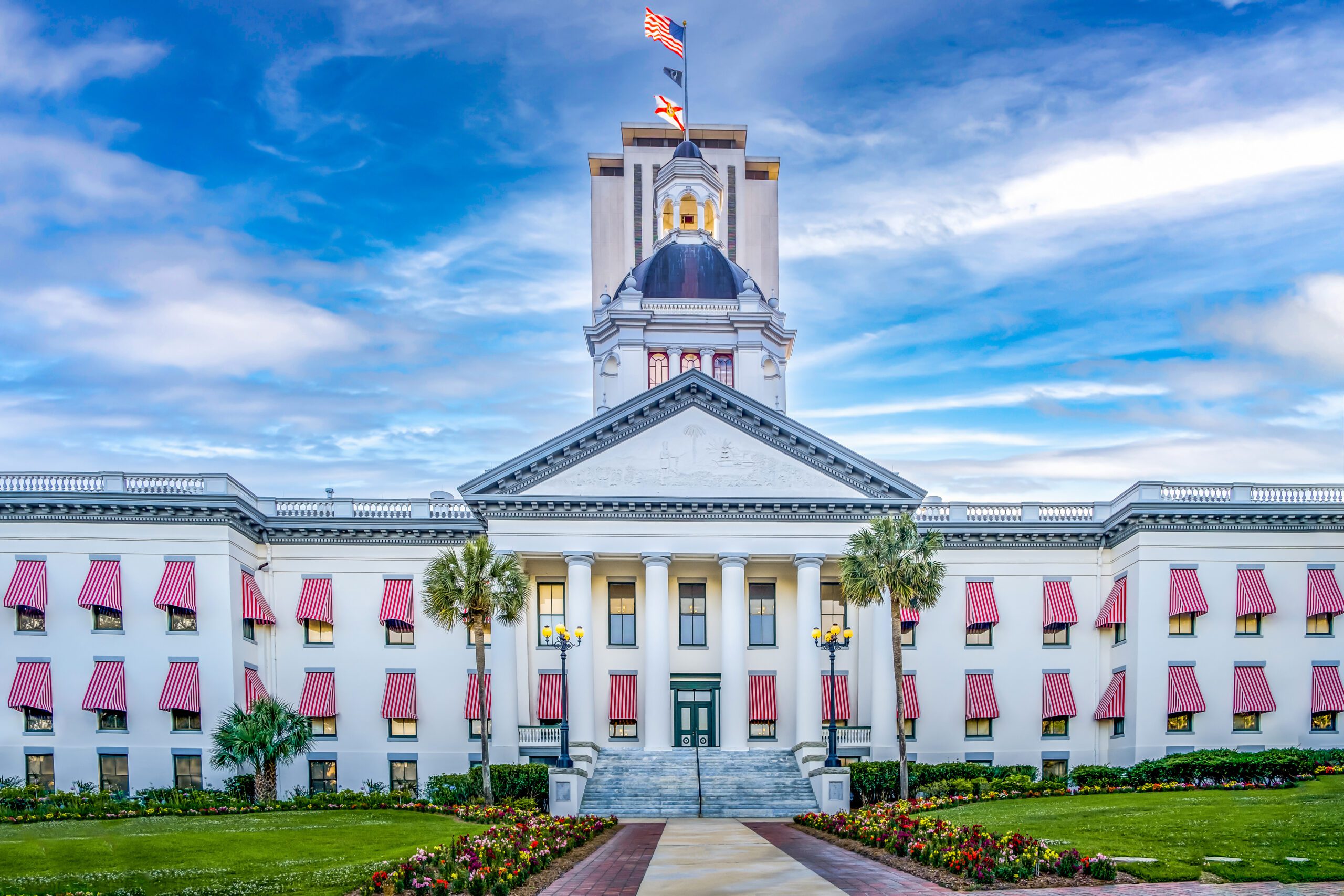
Florida occupies an unusual position in the 2026 insurance AI regulation landscape. Unlike Colorado or New York, Florida AI insurance regulation has not yet taken the form of a comprehensive AI governance statute for insurers. But it is not a quiet state on this question. HB 527, a proposed human review mandate for insurance claims denials, is moving through the legislature with bipartisan momentum, and the stakes for Florida carriers are amplified by the market context: a state that has spent three years rebuilding carrier participation after a period of historic losses, insolvencies, and policy nonrenewals.
AI in insurance is not an abstract compliance question in Florida. It connects directly to the core tension the Florida market has been navigating since 2022: how to use technology to improve claims accuracy and operational efficiency at scale without triggering the kind of consumer protection backlash that invites heavier regulation.
HB 527: What Florida’s AI Claims Handling Law Would Require
House Bill 527, sponsored by Rep. Hillary Cassel and filed November 24, 2025, would establish a clear rule for insurance AI compliance in Florida: algorithms, AI systems, and machine learning tools may not serve as the sole basis for adjusting or denying a claim.¹
The bill’s requirements, if enacted, would include:
Human Review of Claims Denials: Any claim denial or payment reduction must be made by a qualified human professional, defined as an individual who, under the Florida Insurance Code, has the authority to adjust or deny that category of claim and may exercise that authority over the specific claim.² The reviewing professional must sign off on the denial and document how AI tools were used in reaching the decision, if at all.
Claims Manual Disclosure: Insurers that use AI or algorithmic systems in claims handling must describe in their claims handling manuals, which are subject to regulatory review, the manner in which such systems are used and how the insurer’s use complies with the statute.³
Scope Expansion: During committee review, an amendment expanded the bill to include workers’ compensation claims and health maintenance organizations, broadening its application beyond the original property and casualty focus.⁴
The proposed effective date is July 1, 2026.
Where the Bill Stands
HB 527 cleared its first House committee stop unanimously in December 2025. A companion bill, SB 202, is moving in the Senate. The unanimous subcommittee vote is significant. The bill drew support from hospitals and physicians, and while insurer trade groups including the Florida Insurance Council and the American Property Casualty Insurance Association raised concerns about processing speed and operational costs, the political trajectory favored passage as of early 2026.⁵
The bill’s sponsor tied it explicitly to national frustration with automated claims processing, referencing high-profile attention around algorithmic claim denial practices in the health insurance sector and framing the requirement as a basic accountability standard: a human professional should be able to explain and stand behind any denial.⁶
Florida Insurance Commissioner Michael Yaworsky told legislators he supports the policy objectives of disclosure, auditability, and a human in the loop, while stopping short of formally endorsing the specific legislative mechanism.⁷ His framing suggests the Division of Insurance may have parallel administrative guidance in development regardless of the bill’s fate.
The McCarran-Ferguson Backstop: Why Federal AI Rules Don’t Override Florida
One issue raised during Florida’s HB 527 debate is the federal AI executive order, specifically whether a federal preemption framework would override state insurance AI regulation. Rep. Cassel addressed this directly: under the McCarran-Ferguson Act of 1945, states have primary authority to regulate the business of insurance, and federal law does not preempt state insurance regulation unless Congress explicitly says so.⁸
This is the same legal framework the NAIC has invoked in its pushback against the December 2025 executive order and the White House’s National AI Legislative Framework. For Florida carriers, the implication is practical: HB 527 compliance, if the bill passes, will be required regardless of what happens at the federal level with broader AI legislation.
The Florida Market Context: Why AI Compliance Stakes Are Higher Here
Florida’s insurance market has been undergoing a significant structural recovery. The Citizens Property Insurance Corporation depopulation program, which WaterStreet covered in depth in our analysis of Florida’s market reforms, has been reshaping carrier participation across the state. Private carriers have been reabsorbing policies from Citizens, which peaked at over 1.4 million policies during the height of the market crisis.
That recovery was built in part on carriers’ ability to deploy better data and modeling tools to assess risk accurately in a high-CAT, high-litigation environment. AI-assisted claims triage and payment integrity systems are central to the operational model for carriers writing Florida property business at scale. HB 527 does not ban those tools. It requires that the final adverse decision be made and owned by a qualified human.
For carriers that have already built human review workflows for complex or disputed claims, the operational lift may be modest. For carriers that have deployed automated denial pipelines with minimal human touchpoints, the preparation window before July 1 is narrow.
How P&C Carriers Should Prepare for AI Claims Compliance Now
Florida’s Insurance Commissioner framed the policy goal as disclosure, auditability, and a human in the loop, and that framing is likely to be durable regardless of HB 527’s legislative fate. The market conduct examination environment in Florida is active, and the combination of catastrophe loss scrutiny and AI governance scrutiny creates meaningful regulatory surface area for carriers writing Florida business.
Practical steps that carriers should be taking now include mapping all AI and algorithmic tools used in the claims workflow, identifying any automated denial or payment reduction logic, designing a human review queue and reviewer qualification standard, and drafting the AI section of the claims handling manual in a format that is factual, specific, and defensible to regulators.
Florida is not Colorado or New York yet. But the direction of travel is clear, the July 2026 compliance deadline is approaching, and getting ahead of the insurance AI regulation requirements is worth the investment.
About WaterStreet
About WaterStreet Company: WaterStreet provides cloud-based policy administration software for small to mid-size P&C carriers. Our platform is designed to support the governance, documentation, and workflow requirements carriers increasingly need to meet regulatory expectations in an AI-driven environment.
Contact Us to see a demo or learn more!
Sources:
- Insurance Business Magazine, Florida Lawmakers Propose Mandatory Human Review for Claim Denials (November 2025)
- Insurance Journal, Florida House Panel Passes Bill Requiring Human Touch on Claims Denials (December 2025)
- Repairer Driven News, Florida Advances Bill on AI Use in Claims Handling (December 2025)
- WDAE Florida News, Florida Bill Would Require Human Review of Insurance Claim Denials (December 2025)
- Complete AI Training, Florida Moves to Put Humans, Not Algorithms, in Charge of Insurance Claim Denials (December 2025)
- Florida Politics, House Advances Bill Making Humans Review Insurance Claims (December 2025)
- Complete AI Training, Florida Moves to Put Humans, Not Algorithms, in Charge (December 2025)
- Florida Politics, House Advances Bill Making Humans Review Insurance Claims (December 2025)